
The Smallest Design Decision at Your Event Is Also the Most Important
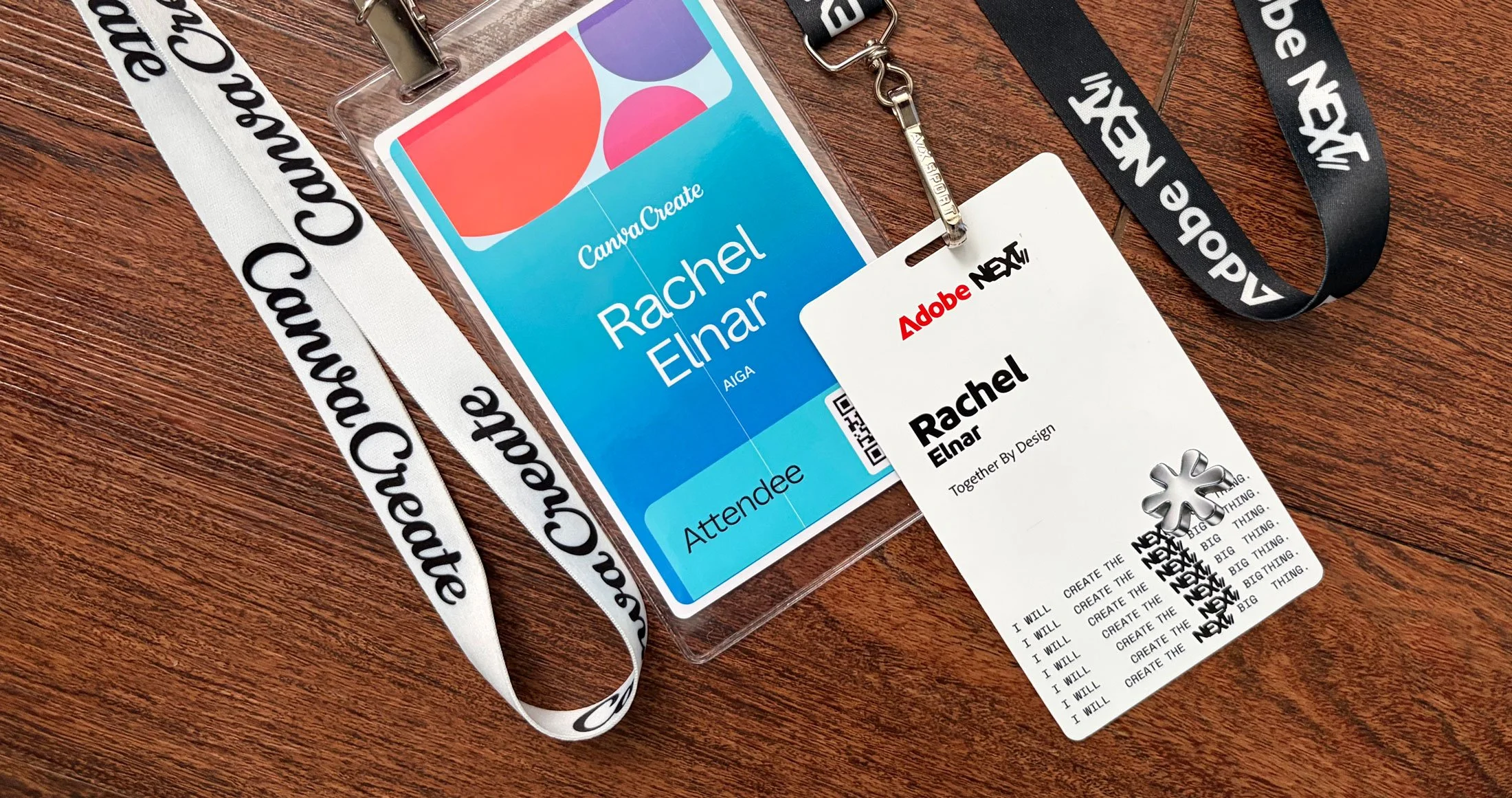
Name tags from Canva Create and Adobe Next
I’ve been to a lot of events. I will continue to go to a lot of events. This is my life now.
Two of the most recent ones I attended have been on my mind lately. Adobe Next, a small, invite-only gathering of design and film educators. And Canva Create, a huge creative festival which had close to two thousand people, outdoor activations, and the general atmosphere of a theme park. Two very different events. Same underlying job: help build creative community.
But to understand why that job matters, I have to tell you about an event from a few years ago.
The Room Where Nobody Moved
A few years ago I attended First Round—a beloved one-day event put on by the team at UnderConsideration, where designers share the raw, vulnerable, fascinating work of first client presentations. Good content. Great room. Smart people. No name tags.
During the breaks, everyone stayed exactly where they were. Clusters formed. Cliques held. The designers who didn’t already know each other left not knowing each other. Not because they weren’t interested. But because nobody had a reason to walk up to a stranger.
A name tag is a reason to walk up to a stranger. That’s it. That’s the whole reason.
What the Name Tag Is Actually Doing
A name tag is not a sticker. It is the first decision you make about whether your attendees will actually connect with each other. The hierarchy tells you everything about what the organizer values. Most name tags get it wrong in the same way: first name big, everything else tiny. Which feels friendly! A big friendly name. Very approachable.
Except a first name alone gives you almost nothing to work with. “Hi Rachel” gets you exactly one conversation further than a smile. What you actually need is context. Where is this person from? What’s their world? That’s the bridge to “oh interesting, tell me more.”
Name should be readable across a table. Not a step away. Across a table. Organization should be right there with it—large enough to actually read, present enough to matter. Title is the least useful thing and can be small. Title tells you someone’s rank. Organization tells you their world. These are not the same thing, and one of them is significantly more useful at a party.
When the name is the only thing you can read, you are telling your attendees: finding each other is not our problem to solve. They feel that. They probably can’t articulate it. But they feel it.
Two Events, Two Scales, Same Problem
Adobe Next was small and intentional. Handpicked educators from notable design departments around the country. Adobe knew exactly who was coming and why. When the guest list is that deliberate, the name tag has a lot riding on it—these are people who were specifically chosen to be in a room together. The design of how they find each other should reflect that.
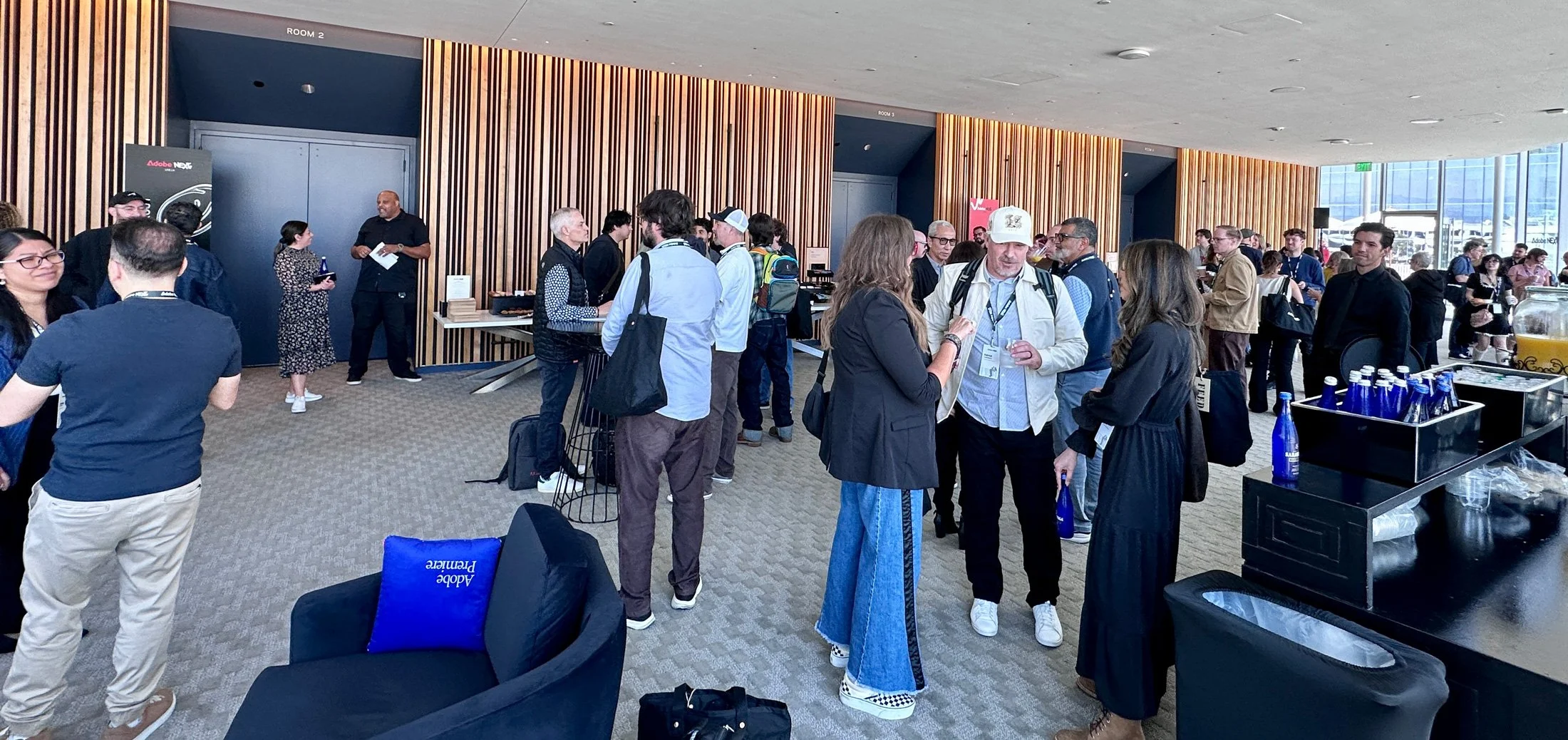
Active mingling and networking at the Adobe Next event at the Universal Studios backlot.
Canva Create was the opposite of small. Thousands of people, all outside, activations everywhere, genuinely joyful chaos. The kind of event where you could spend four hours and never feel like you saw all of it.
Even at Canva Create, there were lounges. Networking areas. Moments where someone sat down across from a stranger and had about thirty seconds to decide whether to say hello.
In that moment, scale disappears. It’s just two people and whatever is, or isn’t, between them to make starting easier.
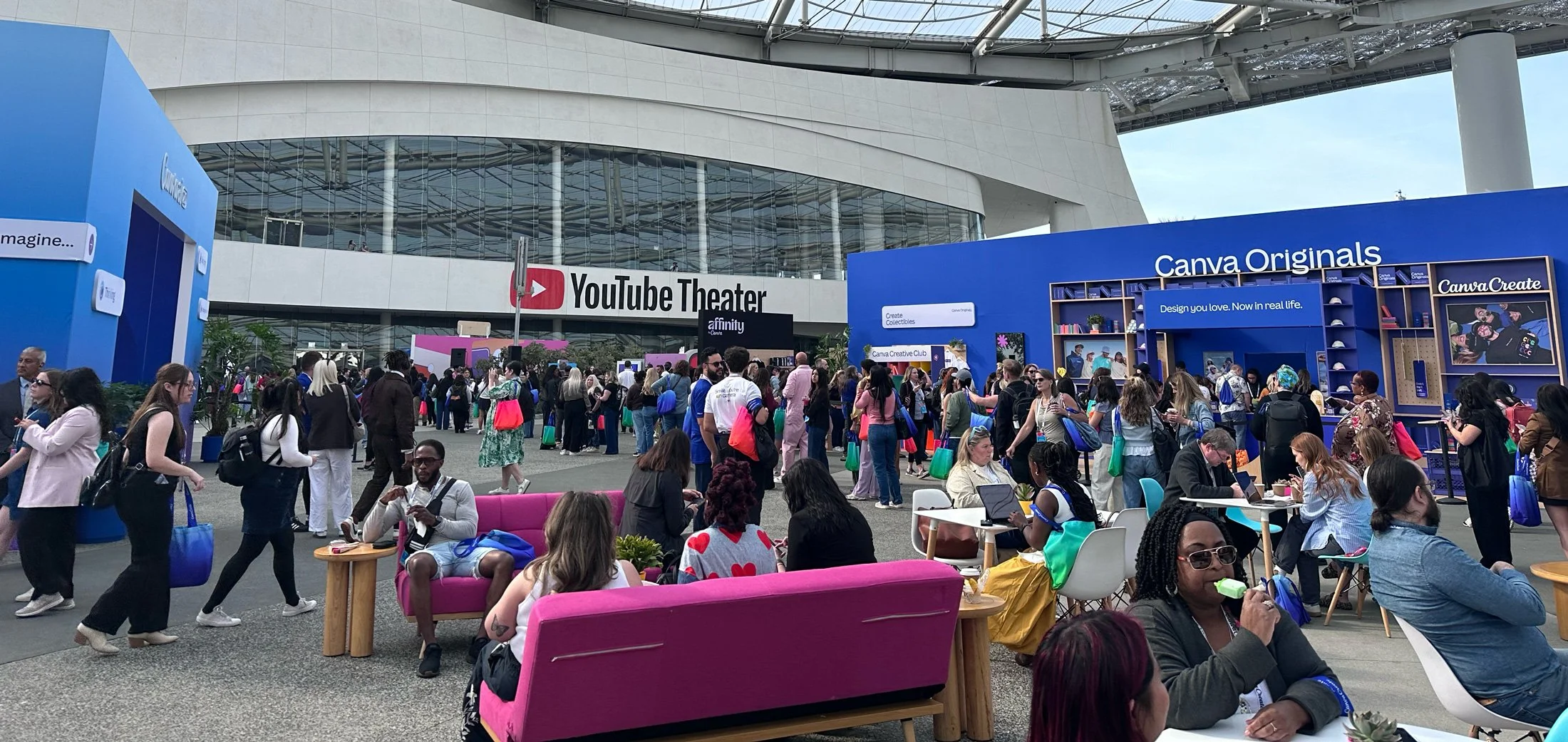
Mixing areas among booths and activations at the Canva Create event at Hollywood Park.
Name tags matter at forty people. They matter at five thousand. They matter any time connection is part of what you’re promising. And if you’re running an event, connection is always part of what you’re promising. Even if you didn’t say it out loud.
It’s Hospitality
I’ve spent a long time thinking about what hospitality actually means in the context of events. Not the catering. Not the swag. The philosophy underneath it.
Hospitality is the art of anticipation. Knowing someone is coming and designing for their arrival before they get there. You can’t manufacture connection. But you can remove the friction that prevents it. Name tags are the cheapest, highest-leverage tool you have. They are also the most reliably under-designed thing in the room.
The same logic extends to everything—wayfinding, signage, room layout, how you structure breaks. Every decision is answering the same question: are you designing for people to find each other, or are you leaving that to chance?
At First Round, they left it to chance. The designers stayed in their clusters. The conversations that didn’t happen that day, we’ll never know what they were.
That’s the quiet thing about hospitality failures. Nobody files a complaint. Nobody writes a review (except, maybe me). People just go home having connected with fewer people than they might have, and they don’t even know what or who they missed.
Design for the conversation. It’s not a small thing.